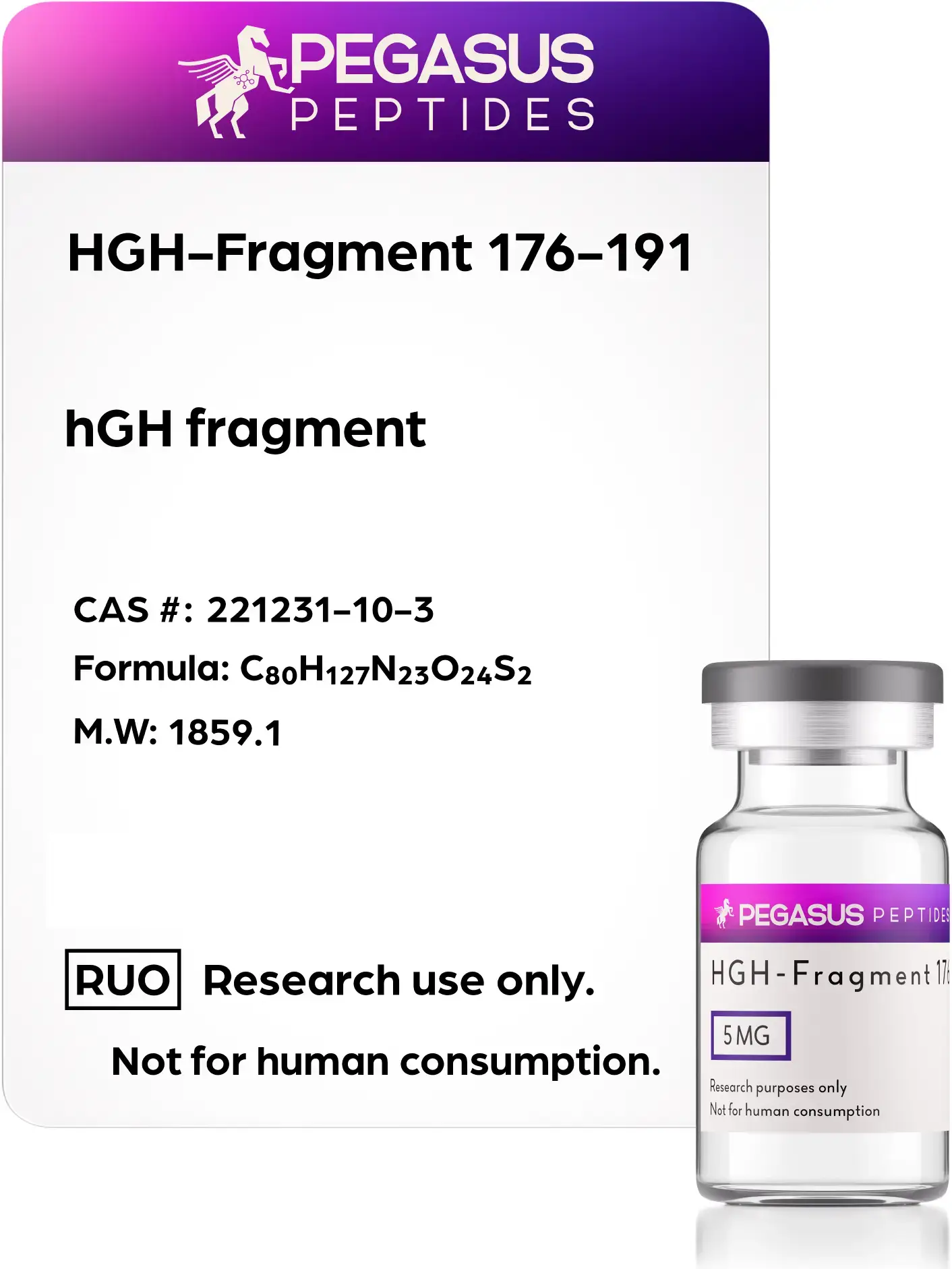

HGH-Fragment 176-191
$40.00
HGH Fragment 176–191 (hGH C-terminal peptide) from Pegasus Peptides is produced for consistent, research-grade performance. Clear specs, batch documentation, and careful handling practices help your team generate reliable, repeatable results with confidence.
Buy any 5 items, save 15%. Mix any products — the discount applies to the whole order at checkout.
For research purposes only.
Not for human consumption.
Batch testing in progressCOA published on completion.
In stock
| Molecular formula | C80H127N23O24S2 |
|---|---|
| Molecular weight | 1859.1 |
| Class | hGH fragment |
Read the research overview for hGH Fragment 176-191
Email me when this COA is published
Overview
HGH Fragment 176–191 is a C-terminal segment of human growth hormone commonly explored in preclinical research on adipocyte biology, lipid turnover, and metabolic signaling. We keep things straightforward: clean labeling, clarity-first specs, and access to batch documentation so you can verify exactly what you’re working with.
Key research highlights (in plain terms)
-
Adipocyte signaling & lipid balance — used in cell and tissue models to examine markers linked to lipolysis vs. lipogenesis (e.g., glycerol release, fatty-acid mobilization) under controlled conditions.
-
Metabolic readouts — applied in workflows that track energy-use indicators and pathway activity in fat cells, connecting receptor-level signals to measurable outcomes.
-
Dose–response & time-course — suited for experiments that profile concentration effects and exposure windows, enabling clean comparisons across assay runs.
-
Comparative assays — useful for side-by-side studies versus full-length hGH or related peptides to evaluate selectivity, downstream markers, and model-specific responses.
Why Pegasus
-
Purity you can verify: batch testing with documentation (COA available)
-
Clarity in every vial: straightforward specs and labeling
-
Consistency you can trust: stable sourcing and careful handling
Specifications
-
Form: Lyophilized powder
-
Identity: Human growth hormone fragment 176–191 (C-terminal peptide)
-
Appearance: White to off-white
-
Purity: ≥98% (HPLC)
-
Solubility: Sterile water or appropriate buffer (optimize per protocol)
-
Packaging: Labeled vial with lot and batch ID
Storage & handling
-
Store dry at −20 °C, protected from light and moisture
-
After reconstitution, aliquot and store at −20 °C; avoid repeated freeze–thaw cycles
Included with your order
-
Labeled vial of HGH Fragment 176–191 (research grade)
-
Batch/lot ID with access to testing details (COA)
| Weight | 0.025 lbs |
|---|---|
| Dimensions | 2 × 1 × 1 in |
| Size | 5mg |
You may also like…
-
Peptides
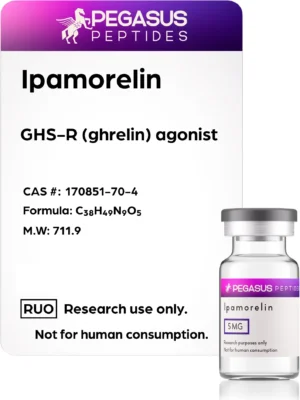
Ipamorelin
$54.95 Select options This product has multiple variants. The options may be chosen on the product page -
Peptides
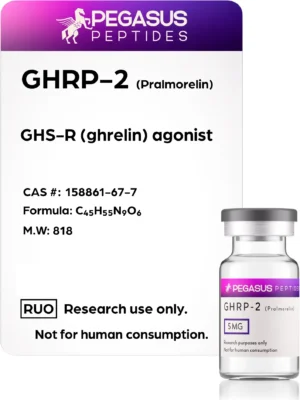
GHRP-2
$25.00 Select options This product has multiple variants. The options may be chosen on the product page